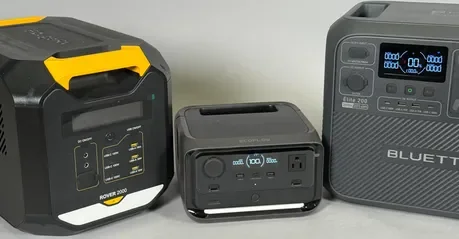
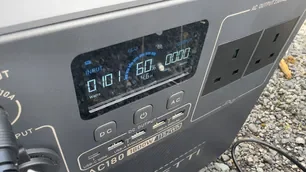
Milliamp-hours, or mAh, has been the go-to battery capacity metric for consumer electronics for decades, but in 2026, it is increasingly clear that this number tells only a small part of the story and can be actively misleading when comparing devices with different battery chemistries. The fundamental problem is that mAh measures charge capacity without accounting for voltage, and since different battery chemistries operate at different nominal voltages, the same mAh rating can represent vastly different amounts of actual stored energy. Lithium-ion cells typically operate at 3.7 volts nominal, while the new sodium-ion cells hitting the market operate at approximately 3.0 volts, and solid-state lithium cells can operate at higher voltages. This means a 5,000mAh sodium-ion battery stores significantly less energy than a 5,000mAh lithium-ion battery, even though the mAh number is identical. The metric that actually matters is watt-hours, which multiplies capacity by voltage to give a true measure of stored energy. As energy density becomes the defining competitive metric in 2026, Wh/kg is the specification that engineers and informed consumers focus on. CATL's Kirin solid-state battery achieves 350Wh/kg, while Gotion's all-solid-state battery hits 400Wh/kg, numbers that represent a quantum leap over the 250-280Wh/kg typical of current lithium-ion cells. For portable power stations, the shift to 500Ah+ and 600Ah+ large-format cells has made capacity specifications even more confusing, as some manufacturers quote Ah at the cell level while others quote it at the pack level, which involves different voltages. The cycle life specification has also gained importance: with new cells rated for 12,000 or more cycles, the total energy throughput over a battery's lifetime can vary by a factor of ten even between products with the same initial capacity rating. The US Salton Sea geothermal lithium project, backed by a $1.4 billion federal loan, aims to produce battery-grade lithium domestically, which could affect the economics of high-energy-density lithium cells relative to sodium-ion alternatives. Direct lithium extraction technology, which skips the traditional 18-month evaporation process to extract lithium in hours, is being deployed at Eramet's plant in Argentina, potentially stabilizing lithium supply and pricing. For consumers trying to make informed decisions, the lesson is clear: look at watt-hours for total stored energy, Wh/kg for energy density, cycle life for longevity, and consider the chemistry type, because a 5,000mAh sodium-ion battery and a 5,000mAh lithium-ion battery are not comparable despite the identical mAh label.
What mAh really means in 2026 - and why energy density makes it obsolete as a metric
The Circuit